Behind the Scenes
Interview with an MC from the freestyle scene of Southern Italy: "Out here we're far from everything, but strong together"
Behind the scenes with someone who carries Salento's voice
This article grew out of a conversation in a garage in Lecce, sitting on side stools while it rained outside. Our guest is an MC from the local freestyle scene who asked to remain anonymous. Not out of mystery, but because freestyle, he explains, should never be about names. It's about flow, about truth, about whatever the mic picks up the moment a person stops pretending.
We'll call him Marco in this article.
"There are no spotlights out here"
When I ask him what it means to do freestyle in Southern Italy, Marco pauses. He looks at the laptop set up in the corner of the garage where he produces beats. He smiles.
"It means nobody's waiting for your turn. There's no MTV, no record labels sending talent scouts to shows. There's no social media crowd tracking your every move. It means when you step up to a mic in front of 50 people, you're not trying to sell an image. You're trying to tell the truth."
Marco started freestyling at 14. He's 26 now. For twelve years he's spat over beats produced in bedrooms, in garages, in the piazzas of small Salento towns. He's never recorded anything for a label. He has a tiny community on TikTok (around 2,400 followers). He's perfectly aware he's not famous. And he says that's exactly his strength.
"If I were in the mainstream circuit, I'd have to produce content, maintain an image, worry about trends. Out here, in the South, I can grow without rushing. I can fail in private and learn."
The community of few who are many
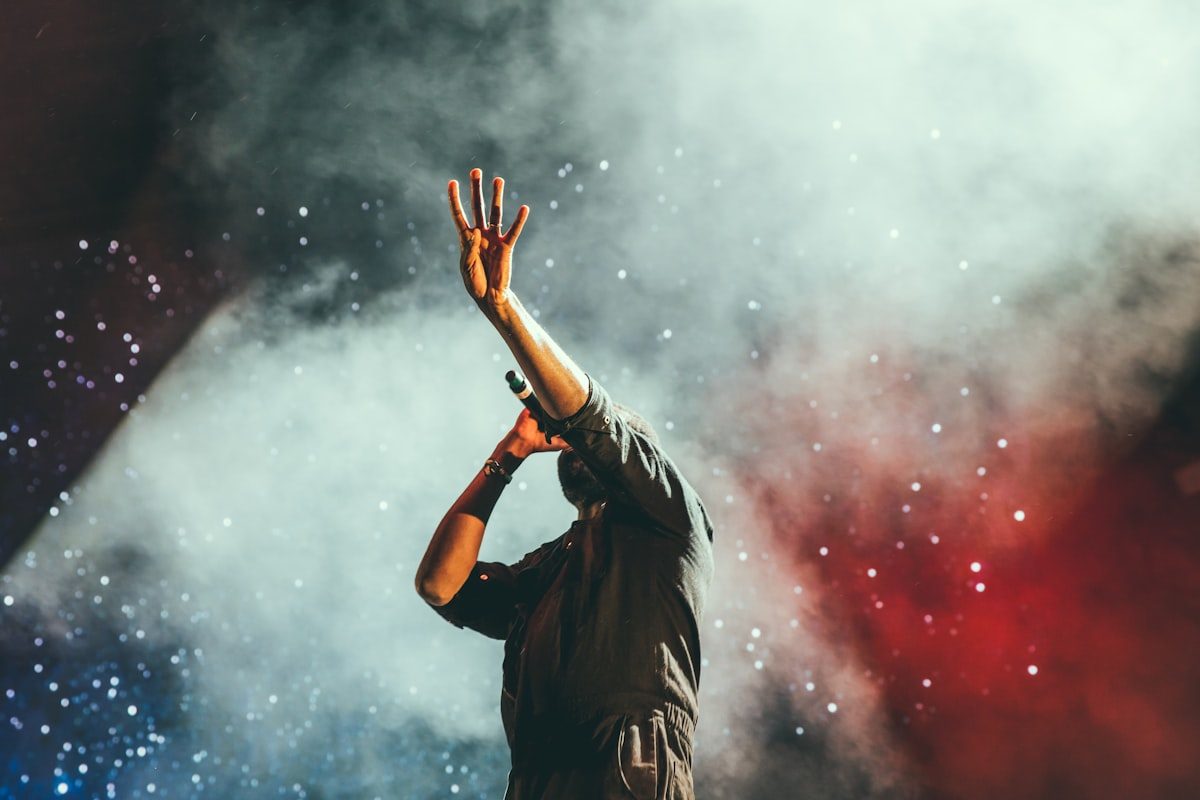
One of the things that stands out when you talk to Marco is how he talks about the scene. He doesn't see it as a competition. He sees it as a family.
"In our circle there are 40-50 active people. That might sound like nothing. But those 40-50 see each other almost every week. We know each other's dogs' names, we know what exams people have coming up at university, we know if someone's having a hard time and needs support."
He shows me his phone. He has a WhatsApp group called "Cipher Salento." It's full of messages from people helping each other download beats, sharing flow tips, lifting each other up. Last Wednesday, one of the guys in the group had an audition to get into a more serious music path. The group backed him. He passed the audition.
"Competition in freestyle is real, but it's a competition that makes everyone better. When I level up, the others rise with me. When Alessio drops a new rhyme I'd never heard before, we all copy it and make it our own. That's how the level keeps climbing."
When the laptop produces and the body breathes
I ask Marco to walk me through his process for creating a freestyle. I expect a technical answer. Instead I get a metaphor.
"The body knows how to build rhymes before the brain allows it. When you hear a beat, your heart rate goes up. You feel the tempo. That's when the brain leaves the room. I let the words come. I listen to the rhymes that surface, as if they were someone else's words."
This is the moment that fascinates me. Marco starts a beat. It's a lo-fi, bouncy thing, with a vintage vocal sample. He closes his eyes. He starts tapping his foot. Then the flow arrives, and for two minutes he disappears. There's only the words, the beat, the air.
When he finishes, he opens his eyes.
"This: this is what I chase every time. Not perfection. Losing control on purpose."
The decision not to go pro
Here we get to the heart of the conversation. I ask Marco why he's never tried to "get serious" with music. Why he's never recorded an album, never signed contracts, never tried to make it in Milan or Rome.
The answer surprises me.
"I've had chances. A couple of people in the scene offered to back me for something bigger. But I looked at what that meant: giving up my cipher friends, moving somewhere else, making content on schedules other people decide, losing creative control."
He pauses.
"I want freestyle for myself. I want the moment when I wake up and choose to feel good, to create, to share. I don't want to turn it into a mandatory path. I don't want creating to become suffering."
He tells me about an MC he knows who crossed over into the major-label circuit. "He's got ten times my followers. He's got money. He's got opportunities I'll never have. But he's also lost the joy. He talks about music like it's a business. I put on a clip of his freestyle, and all I hear is fatigue. I don't hear the game anymore."
Marco doesn't judge that choice. He understands that for some, going pro is the right path. But for him, for what he does, freedom matters more than success.
Words as medicine
A theme that comes up often in our conversation is how freestyle helps him get through life. Marco talks about a hard period three years ago, when he went through a mild depression. He didn't go to therapists (who at the local level are rare and expensive). But he found a medicine in freestyle.
"When you get up on a mic and tell the truth about what you're feeling, something unlocks. It's not psychoanalysis. It's more like shouting the pain out into a space where others understand. And then the crowd holds you up. They tell you, 'Yeah, I know what that feels like.' And suddenly you don't feel alone anymore."
This is something a lot of people underestimate about freestyle. It's not just performance. It's narrative therapy. It's the way pre-modern communities used to share emotion, before social media and psychologists existed.
The scene is growing, and he's watching
I ask Marco if he sees the Salento freestyle scene growing. The question leads to a fascinating conversation about how OnStage has changed the landscape.
"Three years ago, freestyle here was an isolated thing. Very few people knew about it. OnStage said, 'Hey, this exists, and it's worth seeing.' And now we see 14-year-old girls stepping into the cipher. We see grandmothers coming to hear their grandkids freestyle. We see sponsors, media, structure."
He doesn't say it with jealousy. He says it with wonder.
"It's a good thing. It's growth. The only thing we hope is that we don't lose the authenticity. That freestyle stays a language of truth, and doesn't turn into a show."
I ask how you keep that authenticity while it grows.
"It's hard. But I think it's possible if it stays something where freestyle still belongs to the people who do it. If it stays a conversation between people, not a performance for an audience. The audience is invited, but the heart stays between us."
The future, Marco's version
How does this end? Where does Marco see himself in five years?
"Still here, I hope. Still in garages, still in ciphers, still creating. Maybe I'll teach younger kids how to freestyle. Maybe I'll make more polished productions. But I hope it stays a way of being in the world, not a way of making money off the world."
His vision is modest and radical at the same time. Radical because in an age of maximizing, growing, personal branding, Marco chooses the opposite: contentment, community, the pleasure of creating without having to show off.
Modest because he knows this vision isn't for everyone. "There are guys out there who want to be rappers at an international level. That's fair. They've got the right to dream big. I chose a different dream: small, stable, real."
The invitation to OnStage
Before I leave, Marco reminds me about the Summer Open Mic that OnStage organizes.
"If someone reading this thinks 'I want to freestyle, but I don't know how to start,' the Open Mics are the right place. No heavy competition, no forced performance. Just people freestyling, an audience listening, and space to find your voice."
He tells me he watches the Open Mics himself, to see how the scene evolves.
"It's my way of staying connected without needing to get up and spit every time. I see the young ones, I recognize the moment when someone finds their flow, and I think: 'Go. You're discovering something.' It's beautiful."
Final note: behind the scenes
This article was born from a desire to show the behind-the-scenes of something that seems simple: an anonymous Salento MC who freestyles. In reality, behind it there are years of practice, conscious choices, quiet sacrifices, a community that supports, and a vision of what it means to live through your own art.
Marco isn't a celebrity. He doesn't have thousands of followers. He doesn't have record deals. But he has something a lot of people want: he knows why he creates, he creates with people he loves, and creating makes him more whole.
If you know someone like Marco in the Salento scene, you'll understand what I'm talking about.
If you don't know anyone like that yet, we invite you to the [upcoming Summer Open Mics](/eventi). There, you'll meet Marcos and Alessias and Chiaras who are discovering their own flow.
Also read: our article on [how we organize the Block Battle](/blog).
Join the community
If this story about Marco resonates with you, know that OnStage was born exactly to create spaces like his garage. Not to turn freestyle into a spectacle, but to protect the space where freestyle stays truth.
Are you an MC, a b-boy, a photographer, a dreamer? [Join the members' area](/area-soci). We need more Marcos in our movement. We need people who choose community before fame. We're waiting for you.